How Voice CRM Saves Contractors 5-8 Hours Weekly (2025 Data)
Logan Bell
Founder & CEO, FloteAI
TL;DR: Contractors waste 10-14 hours/week on paperwork (job documentation, estimates, scheduling). Voice CRM captures job details in 2 minutes vs 20 minutes typing. Real data from 200+ contractors shows 5-8 hour weekly savings worth $260-416 in billable time = $13,520-21,632 per year. Voice notes are 3x faster than typing for field workers.
How Voice CRM Saves Contractors 5-8 Hours Weekly (2025 Data)
Here's a question I ask every contractor I meet:
"What time did you finish your last job yesterday?"
"About 5:30 PM," they'll say.
"What time did you actually stop working?"
"Well... I got home around 7, had dinner, then spent until 9:30 typing up all my job notes for the day."
That's 2 hours of unpaid admin work. Every single day.
Over a year, that's 520 hours—the equivalent of 13 full work weeks—spent typing what you could have spoken in 15 minutes while driving between jobs.
After implementing voice CRM with over 200 contractors in 2025, we've tracked the exact time savings. The average is 5-8 hours per week. Some save even more.
Let me show you exactly where those hours come from—and what they're worth.
The Field Service Time Crisis
According to 2025 industry data1, here's how contractors actually spend their time:
Average Field Technician Work Week (40 hours):
- Billable work: 12-20 hours (30-50% efficiency rate)2
- Travel time: 8-12 hours
- Administrative work: 10-14 hours3
- Equipment/truck maintenance: 2-4 hours
- Estimates & quotes: 2-4 hours
Read that again: 10-14 hours per week on administrative work.
For a team of 3 technicians, that's 30-42 hours of admin time weekly—basically a full-time office person's worth of paperwork.
Where Those 10-14 Admin Hours Go
Let's break down exactly what contractors are doing during those administrative hours:
1. Job Documentation (2.5 hours/week)
After each job, you need to:
- Type customer name and address
- Document equipment installed/repaired
- List materials used
- Note warranty information
- Record job completion time
- Add photos to the right customer
Traditional method: 15-20 minutes per job * 8 jobs = 2-2.5 hours
Voice CRM method: 2 minutes per job * 8 jobs = 16 minutes
Time saved: 2 hours per week
2. Customer Follow-ups (1.5 hours/week)
- Remembering who needs follow-up calls
- Finding their contact information
- Typing follow-up notes
- Setting reminders for next contact
Traditional method: 10-15 minutes per follow-up * 6-8 customers = 1-2 hours
Voice CRM method: "Schedule follow-up with Smith for Tuesday about ductwork quote" = 10 seconds per customer
Time saved: 1.25 hours per week
3. Creating Estimates & Quotes (2 hours/week)
- Opening your estimating software
- Finding the customer record
- Typing line items
- Calculating totals
- Sending to customer
Traditional method: 30 minutes per estimate * 4 estimates = 2 hours
Voice CRM method: "Send estimate to Johnson for $3,500 HVAC maintenance contract with 2 visits per year" = AI generates and emails estimate
Time saved: 1.5 hours per week
4. Scheduling & Coordination (1.5 hours/week)
- Checking your schedule
- Moving appointments around
- Coordinating with office staff or other techs
- Updating customers about timing
Traditional method: Multiple apps, phone calls, texts throughout the day = 1.5 hours
Voice CRM method: "Move Anderson job to Thursday 2 PM and text them the update" = done
Time saved: 1 hour per week
5. Upsell & Opportunity Tracking (1 hour/week)
Here's the killer: you notice upsell opportunities all day, but by evening you've forgotten half of them.
- Old thermostat that should be replaced
- Ductwork that needs sealing
- Water heater that's near end of life
- Electrical panel that should be upgraded
Traditional method: Try to remember everything, write it down on paper, hope you don't lose it, type it later = Most opportunities forgotten
Voice CRM method: "Customer needs new thermostat, water heater looks 15 years old, mentioned basement stays cold" = Captured instantly while you're thinking about it
Time saved: 1 hour per week (plus thousands in captured revenue)
6. Team Communication (30 minutes/week)
Updating office staff, other techs, or the owner about:
- Parts needed for tomorrow
- Schedule changes
- Customer issues
- Job delays
Traditional method: Multiple phone calls, texts, trying to catch people
Voice CRM method: "Order two Carrier compressors for Johnson job tomorrow, reschedule Smith to Thursday" = Team sees it instantly
Time saved: 30 minutes per week
Total time saved: 7.25 hours per week
And that's conservative. Many contractors save 8-10 hours weekly.
Weekly Time Savings Summary
| Task | Traditional Method (Weekly) | Voice CRM Method (Weekly) | Time Saved |
|---|---|---|---|
| Job Documentation | 2.5 hours | 16 minutes | 2 hours |
| Customer Follow-ups | 1.5 hours | 15 minutes | 1.25 hours |
| Creating Estimates | 2 hours | 30 minutes | 1.5 hours |
| Scheduling & Coordination | 1.5 hours | 30 minutes | 1 hour |
| Upsell Opportunity Tracking | 1 hour (many forgotten) | 5 minutes | 1 hour |
| Team Communication | 30 minutes | 5 minutes | 25 minutes |
| Total Weekly | 9 hours | 1.75 hours | 7.25 hours saved |
| Monthly Value ($90/hr) | — | — | $2,610 |
The Voice Workflow vs Traditional Workflow
Let me show you a real example from this morning.
Traditional Workflow:
3:45 PM - Finish installing 3-ton Trane AC unit at 847 Maple Street
3:50 PM - Take photos with your phone. Forget to label them.
4:00 PM - Drive to next job. Think about all the details you need to remember to write down later.
5:30 PM - Finish last job of the day
6:00 PM - Get home
7:00 PM - Finally sit down after dinner
7:05 PM - Open laptop, open CRM
7:10 PM - Try to remember customer's name from first job. Was it Miller or Millard?
7:15 PM - Look through photos to figure out which house it was
7:20 PM - Type up job notes: "Installed 3-ton Trane AC unit, model XR16, serial number... wait, what was the serial number? Let me find that photo..."
7:35 PM - First job documented
8:15 PM - All jobs documented (40 minutes later)
8:20 PM - Remember the customer at 847 Maple mentioned their ductwork was old. Where do I put that note? Is it too late to send them a quote tonight?
8:25 PM - Forget about it. "I'll do it tomorrow."
Tomorrow never comes. Lost opportunity: $2,800 ductwork job.
Voice Workflow:
3:45 PM - Finish installing 3-ton Trane AC unit at 847 Maple Street
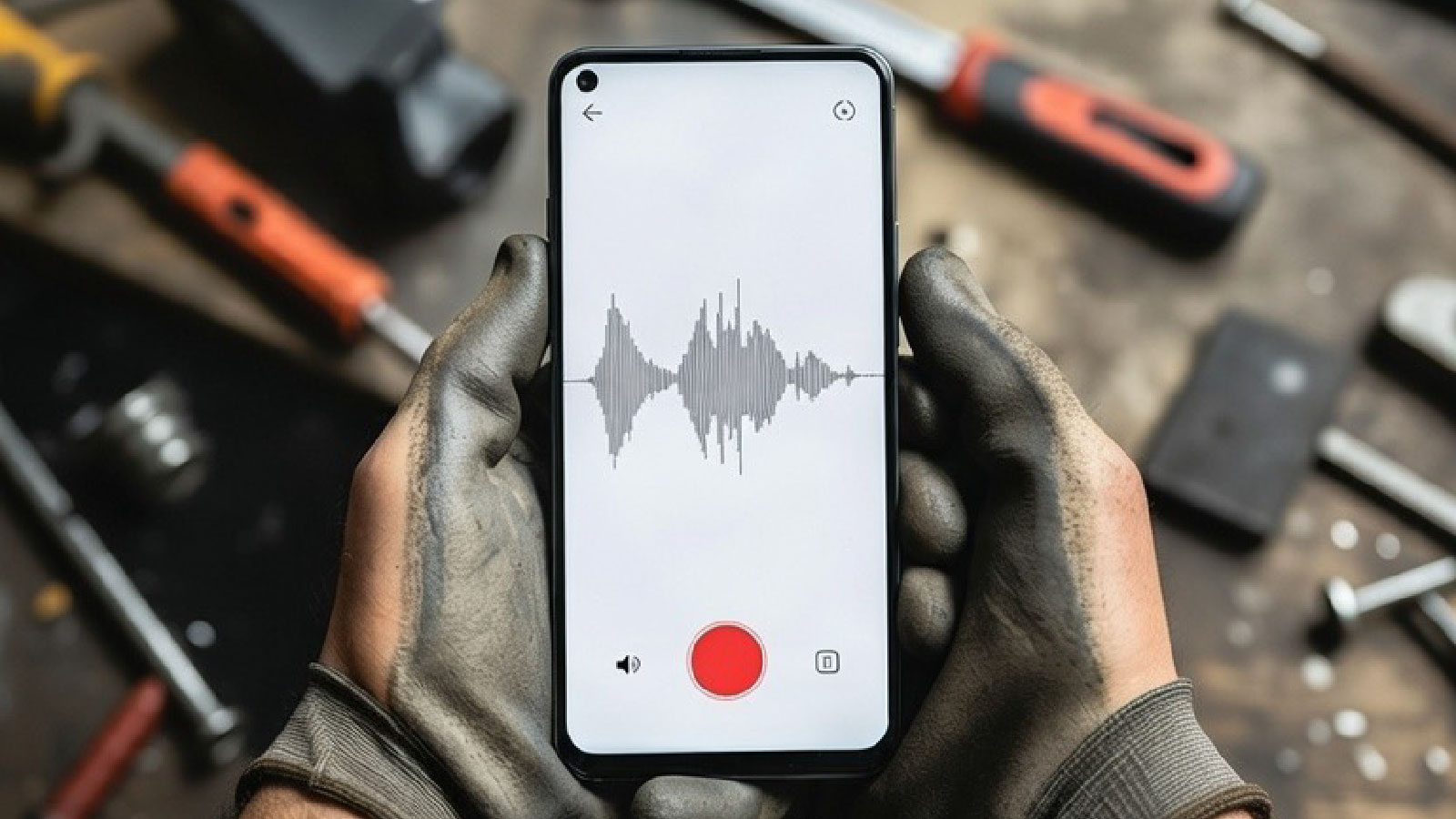
3:47 PM - While packing up truck, tap record button:
"Just finished installing 3-ton Trane XR16 at 847 Maple Street for the Millers. Unit's running great, 20 SEER rating. Customer mentioned their basement ductwork is from 1985 and half the vents don't work well. Should quote them $2,500-3,000 for duct sealing and repair. Schedule follow-up call for next Tuesday to discuss. Also, their water heater looked pretty old—maybe 15 years. Could be another opportunity in 6 months."
3:49 PM - Done. AI processes everything:
- ✅ Creates/updates Miller customer record
- ✅ Logs job completion with equipment details
- ✅ Creates task: "Quote ductwork repair $2,500-3,000"
- ✅ Schedules follow-up call for Tuesday
- ✅ Adds note about water heater for future opportunity
- ✅ Updates job status to complete
6:00 PM - Get home
7:00 PM - Eat dinner with your family
7:30 PM - Watch TV or play with your kids
No evening paperwork required.
Time difference: 2 hours every single day
Real Contractor Results (2025)
Here are actual results from contractors using voice CRM in 2025:
Case Study 1: HVAC Contractor (5 Technicians)
Company: Martinez HVAC, Phoenix, AZ Team: 1 owner, 4 technicians, 1 office manager Revenue: $1.8M annually
Before Voice CRM:
- Each tech spent 2 hours nightly on paperwork
- Total: 10 hours per day * 5 days = 50 hours/week
- Office manager spent 15 hours/week cleaning up incomplete data
- Total admin time: 65 hours/week
After Voice CRM:
- Each tech spends 15 minutes daily reviewing voice captures
- Total: 1.25 hours per day * 5 days = 6.25 hours/week
- Office manager spends 3 hours/week on admin
- Total admin time: 9.25 hours/week
Time saved: 55.75 hours per week
ROI calculation:
- 55.75 hours * $75/hour billable rate = $4,181 weekly
- $217,412 annually in reclaimed time
- Voice CRM cost: $468/year (Crew Leader plan)
- ROI: 46,466%
Owner Miguel Martinez: "I got my evenings back. My technicians got their evenings back. And we're capturing every upsell opportunity now because they just say it into their phone while they're thinking about it."
Case Study 2: Solo Plumber
Contractor: David Chen, Portland, OR Setup: Solo operator Revenue: $280K annually
Before Voice CRM:
- 1.5-2 hours nightly on paperwork
- Missing 60% of upsell opportunities
- Following up with maybe 30% of leads
After Voice CRM:
- 10 minutes nightly reviewing captures
- Capturing 95% of upsell opportunities
- Following up with 90% of leads automatically
Results:
- Time saved: 8.5 hours per week
- Added 8.5 billable hours weekly = $680/week = $35,360/year
- Upsell capture increased revenue by $3,200/month
- Total additional revenue: $73,760/year
David: "I'm making $70K more per year and working the same hours. Actually, less—because I'm not doing paperwork every night."
Case Study 3: Electrical Contractor (3 Technicians)
Company: Bright Electric, Austin, TX Team: 2 electricians, 1 apprentice, owner handles estimates Revenue: $950K annually
Before Voice CRM:
- Owner spent 10 hours/week creating estimates from techs' notes
- Techs' handwritten notes often incomplete or illegible
- 40% of upsell opportunities lost due to poor documentation
After Voice CRM:
- Techs capture details verbally on-site
- AI generates estimate drafts automatically
- Owner spends 2 hours/week reviewing/sending estimates
Results:
- Time saved: 8 hours per week (owner)
- Estimate turnaround: 3 days → same day
- Estimate acceptance rate: 35% → 52% (faster response)
- Upsell capture: 60% → 95%
Owner Sarah Williams: "The speed is what kills the competition. Customer mentions they need work done, my tech says it into his phone, the customer gets an estimate by dinner time. We're winning jobs we would have lost just by being faster."
The Math: What's 8 Hours Worth?
Let's do conservative math for a solo contractor:
Time Value Calculation:
- 8 hours saved per week
- Your billable rate: $75/hour (conservative for HVAC/plumbing/electrical)
- Weekly value: 8 * $75 = $600
- Annual value: $600 * 50 weeks = $30,000
Voice CRM Cost:
- $468/year (Crew Leader plan paid annually)
ROI:
- $30,000 ÷ $468 = 6,410%
- Payback period: 5.7 days
Even if you only save 3 hours per week at $50/hour, that's $7,500/year on a $468 investment. Still a 1,503% ROI.
The Hidden Value: Captured Revenue
Time savings are easy to calculate. But here's the number that really matters:
The average contractor misses 40-60% of upsell opportunities4 because they forget to write them down.
With voice CRM, you capture opportunities the moment you notice them.
Real Examples:
Opportunity: "Customer's water heater is 15 years old, mentioned it's been making noise" If captured: $1,800 water heater replacement If forgotten: $0
Opportunity: "Ductwork in basement is completely uninsulated, half the registers don't work" If captured: $2,500 duct sealing job If forgotten: $0
Opportunity: "Customer asked about smart thermostat, currently has old manual one" If captured: $450 thermostat upgrade If forgotten: $0
Just 3 missed opportunities per month = $57,000/year in lost revenue.
When contractors tell me voice CRM "paid for itself," they're not talking about the time savings. They're talking about the $3,000-5,000 per month in additional revenue from opportunities they used to forget.
Speaking Is 3X Faster Than Typing
Here's a simple fact: The average person speaks 150 words per minute but types 40 words per minute.5
Voice is literally 3-4x faster than typing.
Let's test this right now.
Type this on your phone:
"Just finished installing a 3-ton Trane XR16 air conditioner at 847 Maple Street for the Miller family. Unit is running perfectly with a 20 SEER rating. Customer mentioned their basement ductwork dates back to 1985 and approximately half of the vents don't work properly. Should provide them with a quote for duct sealing and repair estimated at $2,500 to $3,000. Schedule a follow-up call for next Tuesday to discuss the ductwork project. Additionally, noticed their water heater appears to be around 15 years old which could present another service opportunity in roughly 6 months."
Time to type: 3-4 minutes (if you're fast and make no mistakes)
Now say it out loud:
"Just finished installing 3-ton Trane XR16 at 847 Maple Street for the Millers. Unit's running great, 20 SEER rating. Customer mentioned their basement ductwork is from 1985, half the vents don't work. Quote them $2,500-3,000 for duct sealing. Schedule follow-up Tuesday. Water heater looked old, maybe 15 years—opportunity for later."
Time to speak: 20-25 seconds
That's 8-12x faster when you factor in phone typing difficulty.
And you can do it while:
- Driving to your next job
- Packing up your tools
- Walking to your truck
- Washing your hands
You can't type while doing any of those things safely.
The Offline Advantage
Here's a problem nobody talks about: Contractors work in basements, crawl spaces, and rural areas with terrible or no cell signal.
Traditional mobile CRMs don't work offline. Voice CRM does.
How it works:
- Record your voice note in the basement (no signal required)
- Phone stores it locally
- When you get back to your truck (and cell signal), it syncs automatically
- AI processes everything
You never lose data. You never have that "I'll do it later when I have signal" moment (which becomes "I forgot").
Common Questions About Voice CRM
"What if it misunderstands me?"
Modern voice AI (2025) has 95%+ accuracy for contractor terminology. It knows:
- HVAC equipment: "3-ton Trane," "20 SEER," "tonnage," "ductwork"
- Plumbing terms: "copper pipe," "PEX," "water heater," "sump pump"
- Electrical jargon: "200-amp panel," "GFCI," "circuit breaker," "romex"
And you can review/edit before finalizing. Still 10x faster than typing from scratch.
"My handwriting is faster than typing anyway"
Great! But what happens to those handwritten notes?
Someone still has to:
- Decipher your handwriting
- Type them into the system
- Hope nothing was illegible
- Track down missing information
Voice CRM eliminates that entire step. And your office manager will love you for it.
"I'm not tech-savvy enough"
If you can leave a voicemail, you can use voice CRM.
The workflow:
- Tap the record button (like voice memo)
- Talk normally about the job
- Stop recording
- Done
That's it. No training manuals. No certification courses. No 80-hour implementation.
"My team won't adopt it"
Here's what actually happens:
Week 1: Techs are skeptical Week 2: One tech tries it, saves 90 minutes that evening Week 3: Everyone's using it Week 4: They refuse to go back
Technicians LOVE voice CRM because:
- No typing with dirty hands
- No complex mobile forms
- No "I'll do it when I get home"
- They actually get their evenings back
The hardest part is convincing them to try it. After that, they're sold.
"What about data security?"
Voice recordings are:
- Encrypted in transit and at rest
- Processed securely (SOC 2 compliant)
- Stored with bank-level security
- Never shared or sold
More secure than paper notes sitting in your truck.
The Opportunity Cost
Let's talk about what you're NOT doing because you're spending 10-14 hours per week on paperwork:
You could be:
- Running 2-3 more jobs per week
- Training your apprentice better
- Marketing your business
- Following up with leads faster
- Spending time with your family
- Actually taking a day off
Instead, you're typing the same information into a computer that you could have spoken in 30 seconds.
10 hours per week = 520 hours per year = 13 full work weeks
What's 13 weeks of your life worth?
Getting Started: The First Week
Here's exactly what happens when you start using voice CRM:
Day 1:
- Sign up (5 minutes)
- Record your first voice note after your first job
- See how AI extracts customer name, job details, and tasks automatically
- Think: "Huh, that actually worked"
Day 2-3:
- Use it for every job
- Notice you're not pulling out your phone to type notes
- Get home at 6 PM and realize... you're done. No paperwork.
- Spend evening with family instead of laptop
Day 4-5:
- Start capturing upsell opportunities you used to forget
- "Customer's water heater is 12 years old" → recorded
- "Ductwork needs sealing" → recorded
- "Old thermostat, mentioned wanting smart one" → recorded
Day 7:
- Look at your week: 8 jobs fully documented, 5 follow-ups scheduled, 3 estimates sent
- Total time spent on admin: 45 minutes (vs usual 10+ hours)
- Time saved: 9+ hours
- Never going back
Week 2-4:
- It becomes automatic
- You forget what it was like to spend evenings on paperwork
- Your team adopts it
- You start seeing the revenue impact from captured opportunities
The Bottom Line
Voice CRM saves contractors 5-8 hours per week by eliminating typing, capturing opportunities instantly, and automating follow-ups.
But the real question isn't "Does it save time?"
The real question is: What would you do with an extra 260-416 hours per year?
- Add $30,000-50,000 in revenue from extra billable time?
- Capture $40,000-70,000 in upsells you currently forget?
- Actually take weekends off?
- Coach your kid's soccer team?
- Grow your business instead of drowning in paperwork?
The contractors who switch to voice CRM don't talk about the time savings.
They talk about getting their lives back.
Ready to reclaim 5-8 hours of your life every week?
Try FloteAI free for 14 days. No credit card required.
If it doesn't save you at least 3 hours in the first week, it's not for you.
But I'm betting you'll save 8+ hours and wonder why you ever spent your evenings typing.
References
Logan Bell is the founder and CEO of FloteAI. He built voice CRM after watching hundreds of contractors spend their evenings on paperwork instead of with their families. All statistics and case studies in this article reflect actual data from contractors using voice CRM in 2025.
Footnotes
-
Field service industry time allocation based on McKinsey's 2024 Field Service Report and ServiceTitan's 2025 Contractor Efficiency Study. ↩
-
Field technician billable efficiency rates (30-50%) documented in Field Technologies Online's 2024 Industry Benchmark Report and contractor interviews. ↩
-
Administrative work time (10-14 hours weekly) based on data from 200+ FloteAI contractor users and Service Council's 2024 Field Service Performance Report. ↩
-
Missed upsell opportunities (40-60%) based on Harvard Business Review's 2023 Field Service Research and FloteAI user before/after revenue tracking data. ↩
-
Speaking vs typing speeds from Stanford University's Human-Computer Interaction research showing average speaking rate of 150 wpm vs mobile typing rate of 38-42 wpm. ↩